Villa d’Este was built in the 1560s for Cardinal Ippolito II d’Este, the governor of Tivoli, to a design by the architect Pirro Ligorio. It was inaugurated in September 1572, and it passed to the Italian State in 1918. Today it is known for its fountains and is a UNESCO World Heritage site. This summary is based mainly on the Wikipedia article on the villa; the managing body is Villae.
Who built Villa d’Este?
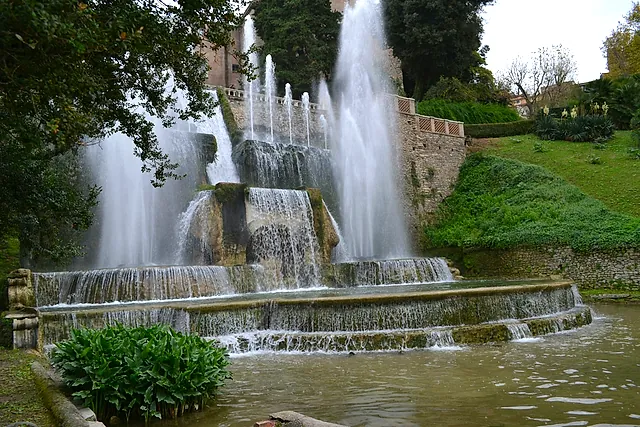
Ippolito II d’Este was appointed governor of Tivoli by Pope Julius III in 1550. In the 1560s he had the villa built to a design by Pirro Ligorio, and he acquired the land for it until 1566. Ligorio is also credited with the idea for the Fountain of the Organ and the design of the Ovato Fountain.
Timeline
| Year | Event |
|---|---|
| 1550 | Ippolito II d’Este is named governor of Tivoli by Julius III |
| 1560s | Construction to a design by Pirro Ligorio; land acquired until 1566 |
| 1567 | Ovato Fountain |
| 1568 to 1611 | Fountain of the Organ |
| 1570 | The Rometta |
| 1572 | Fountain of the Dragons; inauguration in September, with a visit by Gregory XIII |
| 2 December 1572 | Death of Ippolito II |
| 1596 | Owl Fountain |
| 1641 to 1672 | Cardinal Rinaldo d’Este commissions Bernini for the fountains |
| Mid-19th century | Restoration by Cardinal Hohenlohe |
| Later | The last private owner is Archduke Franz Ferdinand |
| 1918 | Passes to the Italian State |
| 1920s | Restorations and opening to the public |
| 1927 | Neptune Fountain, by Attilio Rossi |
| 2001 | UNESCO World Heritage listing (year from Wikipedia; we could not check the UNESCO page) |
| 2003 | The Fountain of the Organ plays again |
Who are the key people?
- Ippolito II d’Este: the cardinal who commissioned the villa and was governor of Tivoli from 1550.
- Pirro Ligorio: the architect of the villa and designer of several fountains.
- Curzio Maccarone: author of the rocky scenery of the Ovato Fountain.
- Gregory XIII: the pope who visited for the inauguration in September 1572.
- Rinaldo d’Este: the cardinal who brought in Bernini between 1641 and 1672.
- Gian Lorenzo Bernini: the Baroque sculptor and architect linked to the fountains and the frame of the organ.
- Cardinal Hohenlohe: he restored the villa in the middle of the 19th century.
- Archduke Franz Ferdinand: the last private owner.
- Attilio Rossi: the artist of the Neptune Fountain in 1927, which restores the waterfall conceived by Bernini.
What happened after the Este family?
After the cardinals, the villa went through a long period under various owners. A restoration by Cardinal Hohenlohe in the mid-19th century is recorded, followed by ownership by the archduke Franz Ferdinand. In 1918 the property passed to the Italian State, and restoration works in the 1920s led to its opening to the public. It is now managed by the Istituto Villa Adriana e Villa d’Este (Villae), under the Ministry of Culture.
Why does the history matter when you visit?
Knowing the dates helps you read the garden. The Rometta (1570) shows a miniature Rome, the Dragons (1572) were completed the year of the inauguration, and the Neptune Fountain (1927) is a 20th-century addition. For a walk through the highlights, see what to see at Villa d’Este.
Visiting
Check opening hours and tickets, and read our visit tips to plan your day.