Villa d’Este in Tivoli is a 16th-century Renaissance villa best known for its terraced garden of fountains. The highlights are the Fountain of the Organ, the Hundred Fountains walk, the Ovato Fountain, the Rometta and the huge Neptune Fountain, plus the frescoed rooms of the villa itself. Allow at least two hours. Check the opening hours page before you go.
What are the must-see fountains at Villa d’Este?
Here is each major highlight, with what makes it worth your time.
Fountain of the Organ
Built between 1568 and 1611, it is a hydraulic organ: water power drives the music. The idea came from the architect Pirro Ligorio, and the structure is framed by an aedicule (a small temple-like frame) designed by Bernini. The organ has played again since 2003. Performances run every day from 10:30, repeating every two hours. See our full guide to the Fountain of the Organ.
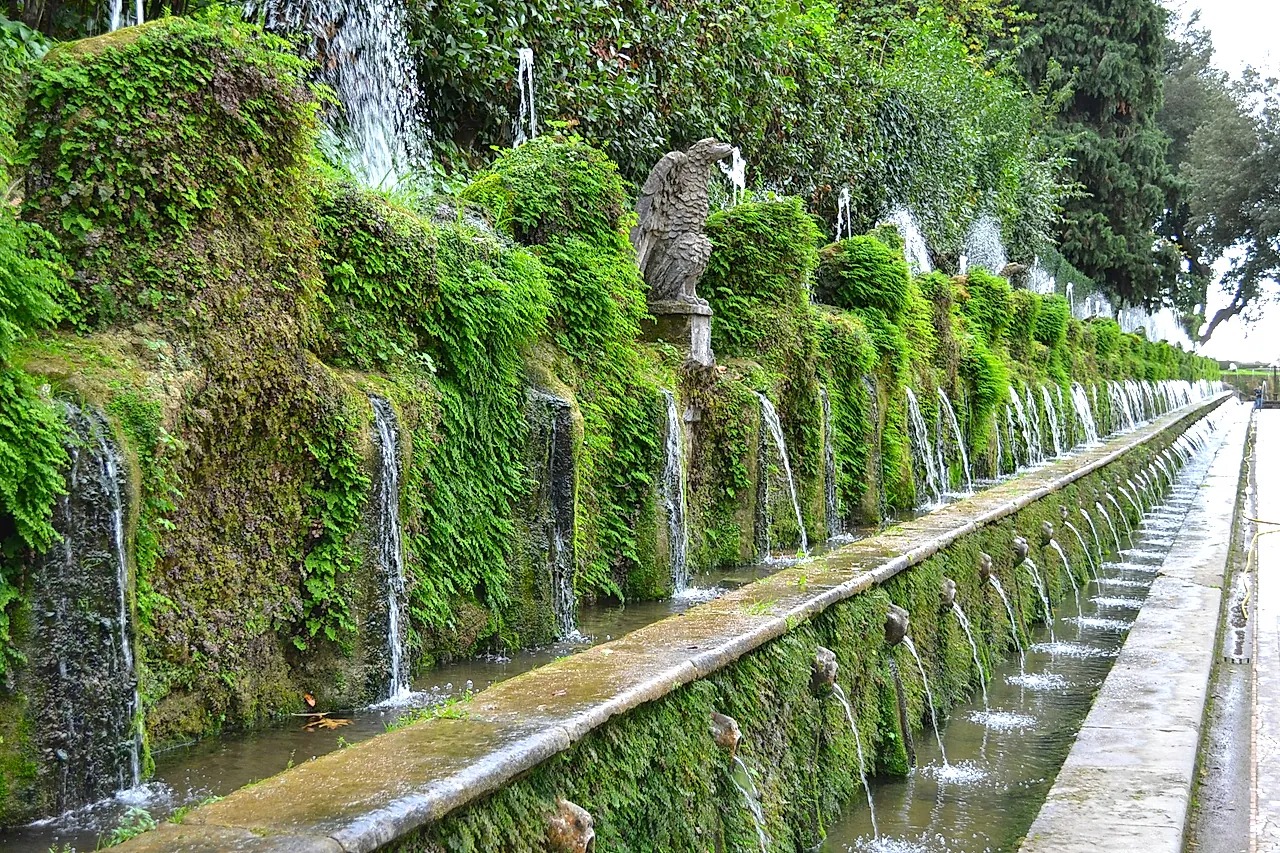
The Hundred Fountains (Cento Fontane)
A long avenue, roughly 100 metres, lined with small jets of water that spill along three channels. The three channels symbolise the rivers that flow into the Tiber. It is the most photographed view of the garden and a good place to slow down.
Ovato Fountain
Dating to 1567, it follows a design by Ligorio, with a rocky, theatrical backdrop by Curzio Maccarone. See the history of Villa d’Este for the people behind it.
Rometta (Little Rome)
Finished in 1570, this basin shows Rome enthroned, with a ship that recalls the Tiber Island in Rome. It is a miniature of the city for guests who could not travel there easily.
Fountain of the Dragons
Dated 1572, it is linked to the eleventh labour of Hercules and is also known as the “Fountain of the Girandola” (a girandola is a fireworks-style wheel of jets).
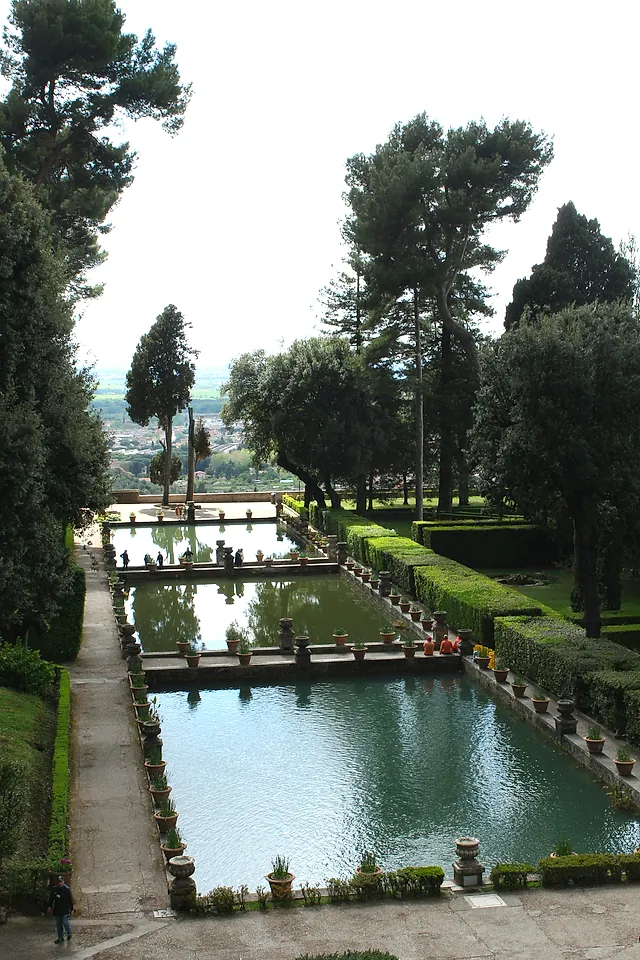
The Fishponds (Peschiere)
Three rectangular pools once used to raise fish. They are calm and rectangular, a good contrast with the busier fountains.
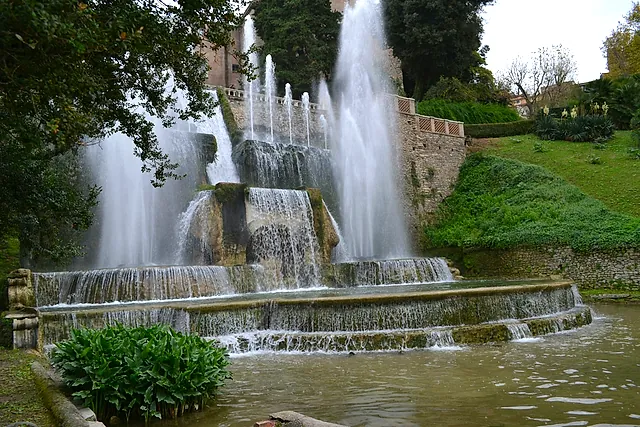
Neptune Fountain
The largest fountain in the garden, made in 1927 by Attilio Rossi. It restores the waterfall that Bernini had conceived earlier.
Owl Fountain
Created in 1596, with mechanical birds and an owl, and restored recently. The times of its show are not confirmed in our sources, so ask staff on site.
Is it worth going inside the villa?
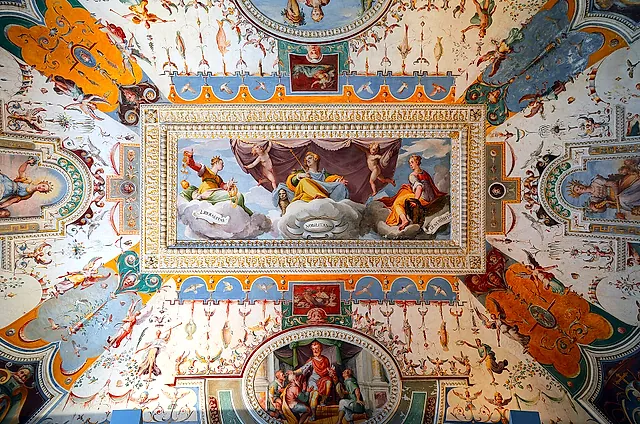
Yes. The main floor, the Appartamento Nobile, has frescoes by the school of Livio Agresti. The lower apartment includes the Salone della Fontanina. Both are included in the visit, and they offer shade and a break from the garden on hot days.
What is a good route through Villa d’Este?
The official route can change, especially when entries are limited on busy days, so follow the signs and staff instructions. A practical plan:
- Arrive early. Opening is 08:30 on Tuesday to Sunday (Monday opens at 14:00).
- Fix your Organ time first. Shows start at 10:30 and repeat every two hours; decide which one you want and plan around it.
- See the apartments when you need a break from sun or crowds.
- Walk the garden terraces, taking in the Hundred Fountains, Ovato and Rometta.
- Finish at the lower garden with the fishponds and Neptune, then leave through the Piazza Campitelli gate.
Quick reference
| Highlight | Date | Notes |
|---|---|---|
| Fountain of the Organ | 1568-1611 | Hydraulic organ; plays from 10:30, every two hours |
| Ovato Fountain | 1567 | Design by Ligorio; rocky scenery by Maccarone |
| Rometta | 1570 | Rome enthroned; ship recalling Tiber Island |
| Fountain of the Dragons | 1572 | Linked to Hercules’ eleventh labour |
| Owl Fountain | 1596 | Mechanical birds; show times not confirmed |
| Neptune Fountain | 1927 | Largest; by Attilio Rossi |
Before you go
Check practical tips for crowds and closures, and see tickets for how to buy. Details can change, so confirm on the Villae website, the body that runs the site.