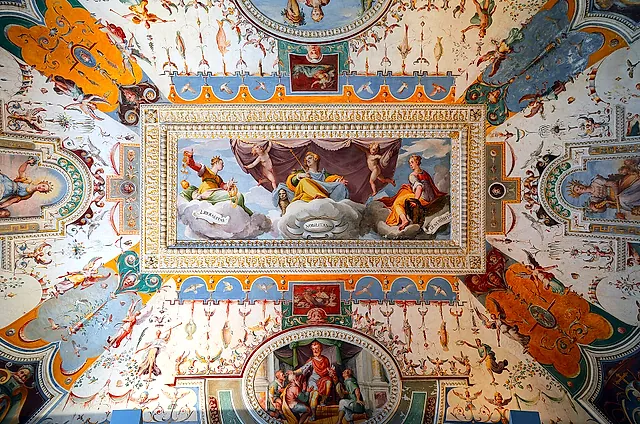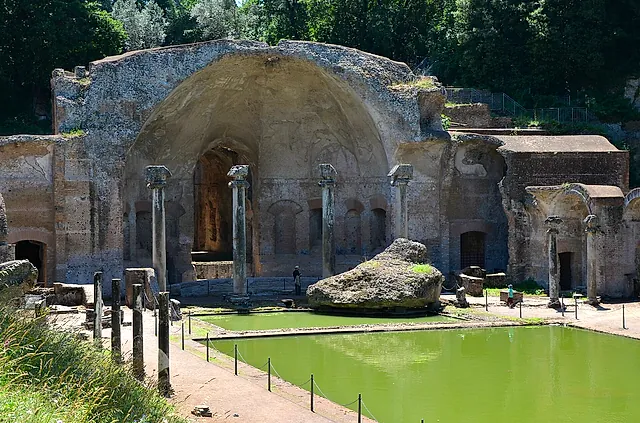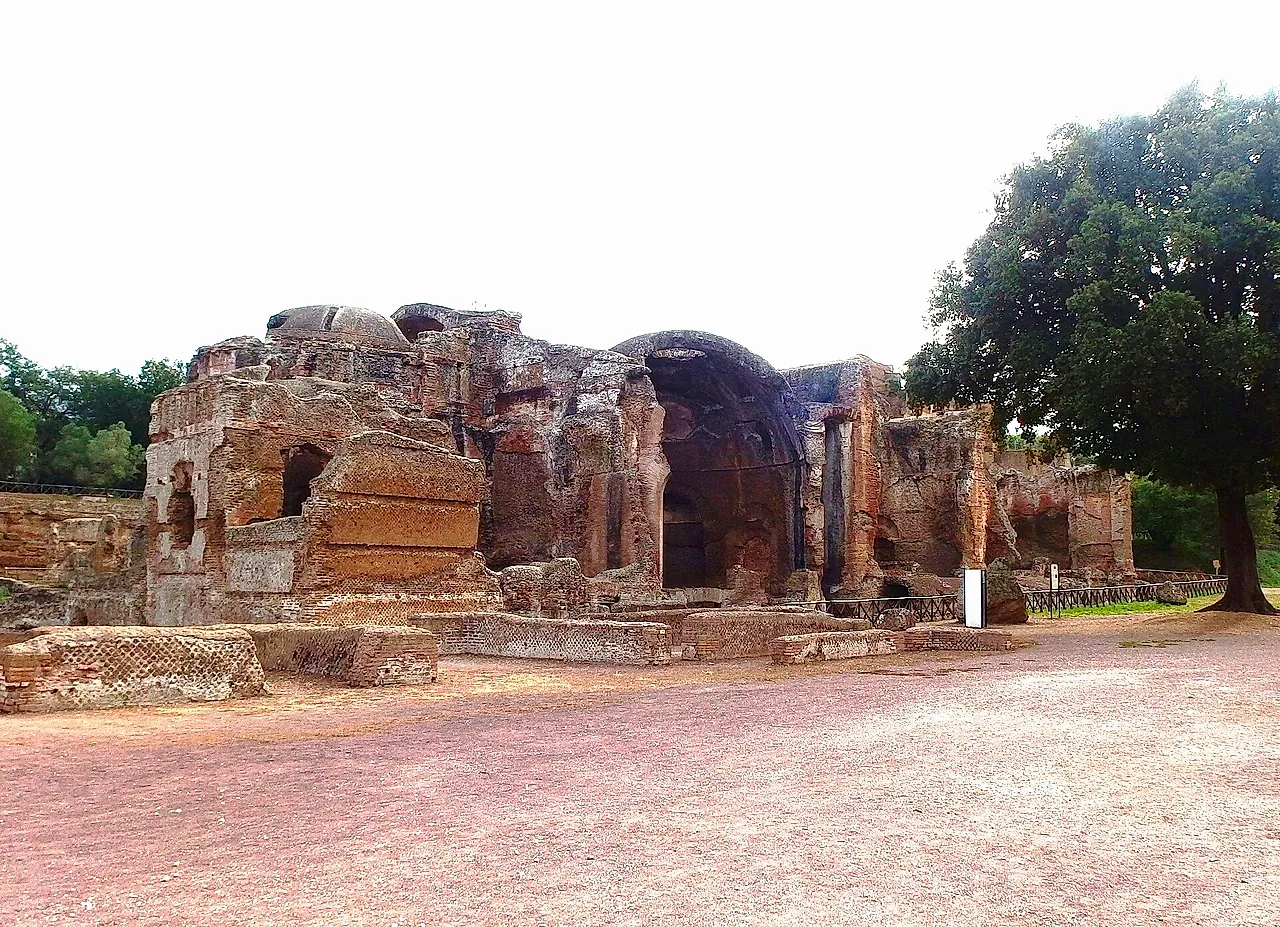
Hadrian’s Villa (Villa Adriana) is the vast imperial residence near Tivoli named after the emperor Hadrian. Its modern story begins with its rediscovery in the Renaissance, when Pirro Ligorio, working in the 16th century for Cardinal Ippolito II d’Este, excavated and tested the ruins. Some of the sculptures and marbles he found were reused at Villa d’Este and later scattered. Ligorio also gave many of the names we still use today.
This guide keeps to what our sources can support. Exact construction dates and the year of the UNESCO listing are not verified here, so we do not state them.
How big was Hadrian’s Villa?
According to the managing body, the villa originally covered at least 120 hectares, and about 40 hectares can be visited today. That scale explains why it is often described as a complex of pavilions, baths, gardens and service areas rather than a single palace. For what you can actually see, read what to see at Hadrian’s Villa.
When was Hadrian’s Villa rediscovered?
The villa was rediscovered during the Renaissance, when interest in classical Rome led scholars and patrons to explore its remains. We do not have a verified year for this moment, so treat it as a period rather than a date.
Who was Pirro Ligorio and what did he do here?
Pirro Ligorio was a 16th-century figure who worked for Cardinal Ippolito II d’Este. Secondary sources report that he carried out excavations and test digs (scavi e saggi) at the villa. The same patron is behind the creation of Villa d’Este in Tivoli, which is why the two sites are so closely linked in the history of Tivoli.
What happened to the finds?
Sculptures and marbles from the villa were partly reused at Villa d’Este. They were then dispersed among antique dealers and museums. This is one reason why finds from Hadrian’s Villa are found in collections far from Tivoli, while the site itself is now mostly ruins and structures. The site’s own museums and scale model help to fill in the picture; see what to see.
Why do the pavilions have the names they do?
Ligorio assigned many of the names that are still in use for the pavilions. So names such as those on the official list should be understood as traditional labels, not necessarily the names used in antiquity. The official list includes the Pecile wall, the Canopus, the Maritime Theatre, the Piazza d’Oro, the Large and Small Baths, the Hall of the Philosophers, the Libraries, the Imperial Triclinium and the Hospitalia.
How are the two villas connected?
| Site | Connection |
|---|---|
| Hadrian’s Villa | Ancient imperial residence, explored by Ligorio |
| Villa d’Este | Created for Cardinal Ippolito II d’Este; received reused marbles and sculptures from the ancient villa |
Both are managed today by the same institute, Villae (Istituto Villa Adriana e Villa d’Este), part of the Italian Ministry of Culture. That is also why a single pass, the Villae Pass, covers both. For the story of the Renaissance garden, see the history of Villa d’Este.
What is still uncertain?
- The exact construction dates of the villa.
- The year of its UNESCO World Heritage listing.
The UNESCO page could not be consulted when we researched this guide, so check the UNESCO listing yourself if you need those details.
How can you see this history on site?
Use the information panels around the site, and visit the museums and scale model, which have their own hours; see visit tips. To combine both villas in one trip, read Hadrian’s Villa and Villa d’Este in one day. The official page is villae.cultura.gov.it, and our overview is at Hadrian’s Villa.